
About This Infographic
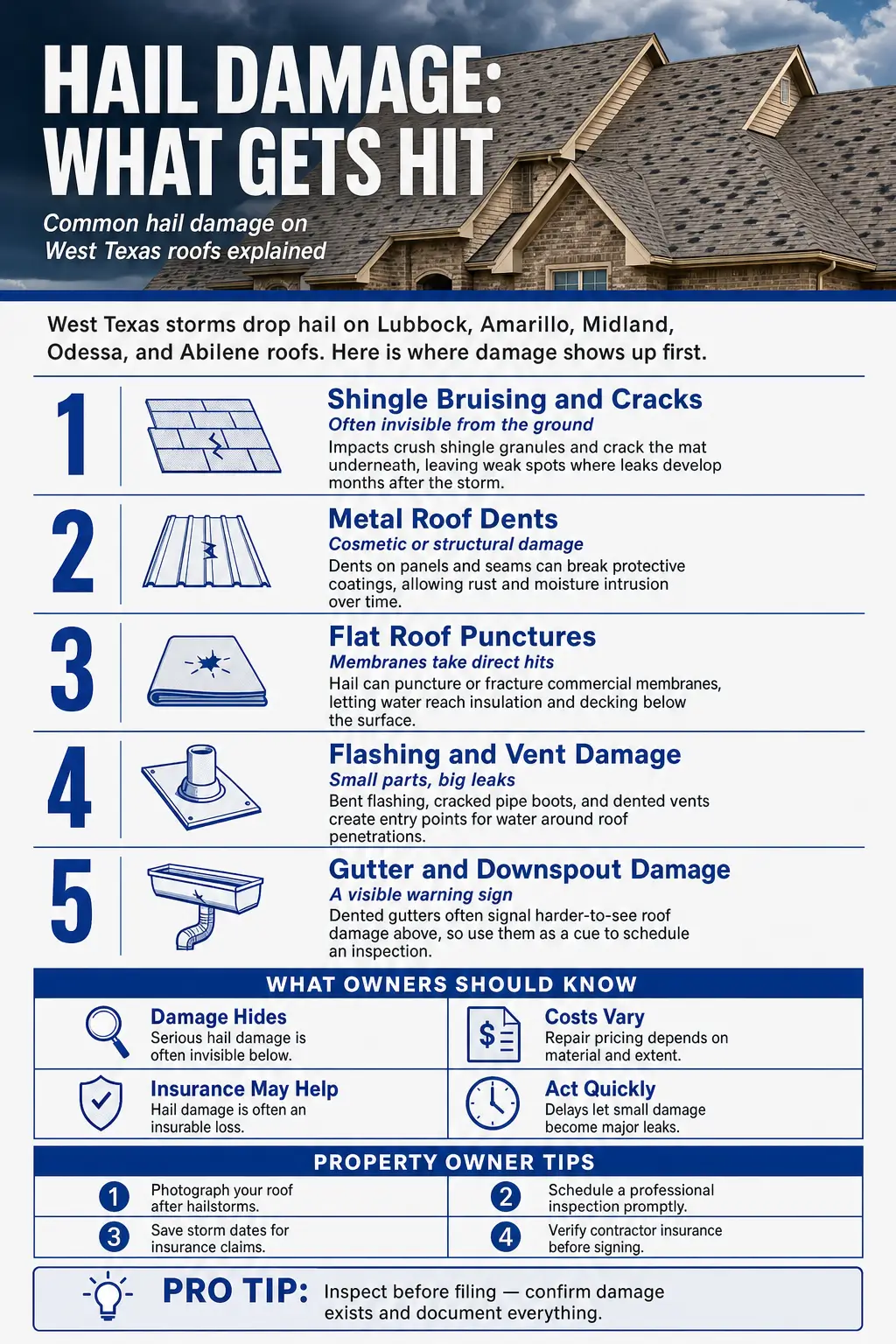
This infographic from Edge Roofing & Coatings explains how hail damages roofs across West Texas, including Lubbock, Amarillo, Midland, Odessa, and Abilene. Hailstorms in this region strike asphalt shingles, metal panels, flat commercial membranes, flashing, vents, and gutters — often leaving damage that is difficult to see from the ground. The graphic walks property owners through the most common damage points, what each one means for the roof underneath, and practical steps to take after a storm. Because hidden hail damage can lead to leaks months later, prompt inspection and documentation are the most important actions any owner can take.
Key Takeaways
- 🔍 Hail damage is frequently invisible from the ground, so a professional inspection is the only reliable way to assess a roof after storms.
- 🍼 Shingle bruising crushes granules and cracks the underlying mat, creating weak points that may not leak until months after the hail event.
- 💧 Flat commercial roofs are vulnerable to membrane punctures, which allow water to reach insulation and decking before any interior signs appear.
- ⚠ Dented gutters, downspouts, and vents are visible warning signs that often indicate more serious damage on the roof surface above.
- 📷 Documenting storm dates and photographing damage immediately helps support insurance claims and speeds up the repair process for home and business owners.
Suspect Hail Damage? Get It Inspected
Edge Roofing & Coatings serves Lubbock, Amarillo, Midland, Odessa, and Abilene with hail damage inspections and repairs. Contact our team after any storm to assess your roof and plan the right repair.


